The short answer
Aokigahara Forest is free, open at all hours and signed throughout. The only things you pay for are the three lava caves at 350 yen each, the bus out from Kawaguchiko, and a guide if you want one. Allow an hour for the main trail, half a day for all three caves on foot, and nine to eleven hours if you are coming from Tokyo.
What a visit actually costs
Start with the part that surprises people: the forest charges nothing. There is no gate, no permit and no closing time, and the marked trails are open on every day of the year. Nothing about walking into Aokigahara Forest requires a booking.
The costs sit around the edges. Each of the three lava caves sells its own ticket at its own door, and a combined ticket for two of them is sold at whichever you reach first.
| What | Adult | Child | Where you pay |
|---|---|---|---|
| The forest and its trails | Free | Free | Nowhere |
| Narusawa Ice Cave | 350 yen | 200 yen | At the entrance |
| Fugaku Wind Cave | 350 yen | 200 yen | At the entrance |
| Saiko Bat Cave | 350 yen | 200 yen | At the entrance |
| Blue Line bus, Kawaguchiko to Narusawa | 680 yen | Reduced | On the bus |
| Guided walk from the lake | From $51 | Varies | When you book |
Opening hours, and the closure that catches people out
All three caves open at nine and close at five, with shorter hours through the winter. The forest keeps no hours at all.
One date matters more than the rest. Saiko Bat Cave, the longest of the three at close to 350 metres, closes from 1 December to 19 March every year while its bat colony hibernates. Waking a hibernating bat costs it reserves it cannot replace until spring, so the closure is not a suggestion.
If the longest cave is why you are coming, plan for late March to November. The lava caves sets out what each one is like inside.
Getting there from Tokyo
Everything funnels through Kawaguchiko. Direct trains from Shinjuku take about two hours, the highway coach takes about the same and is usually cheaper, and a rental car takes two hours outside the weekend rush.
From Kawaguchiko Station the Green Line Retro Bus runs west towards the cave trailheads, reaching the Saiko Bat Cave stop in around half an hour. The Blue Line stops at Michi-no-eki Narusawa in about twenty-five minutes for 680 yen.
How long to allow
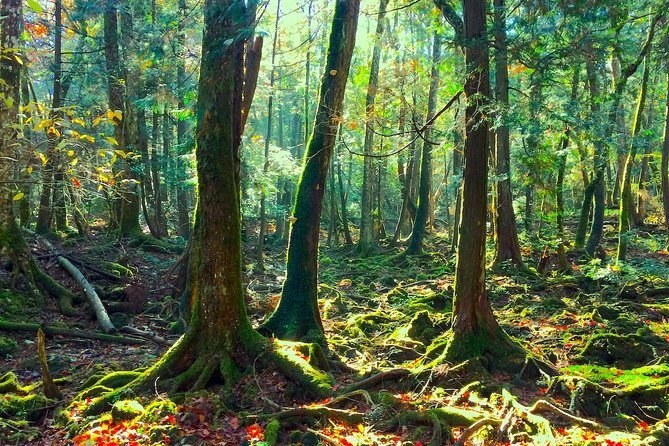
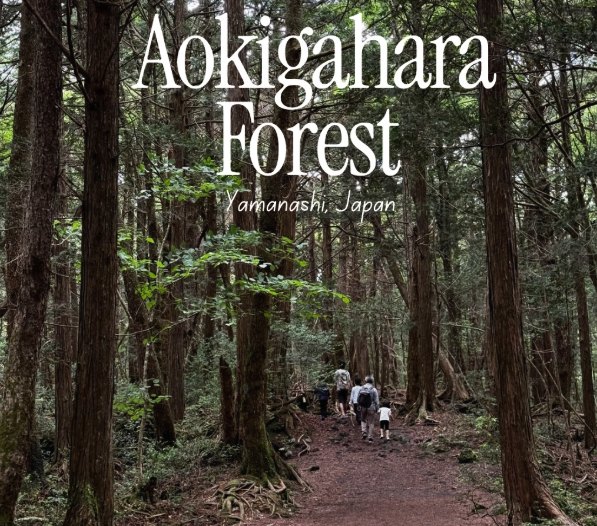
An hour covers the signed loop near the cave car parks at a gentle pace, which is enough to understand what you are standing on. Three to four hours links all three caves on foot with the walking in between, and that walking is the best part of the day rather than a transfer between attractions.
A guided walk from the lake runs three hours door to door. Coming out from Tokyo turns any of these into a nine to eleven hour day, because roughly four hours of it are road in each direction combined.
What to wear, and the cold nobody plans for
Closed shoes with a real tread matter more here than anywhere else in the region. The trail is lava for its whole length, it is uneven, and it turns genuinely slick in rain and for hours afterwards.
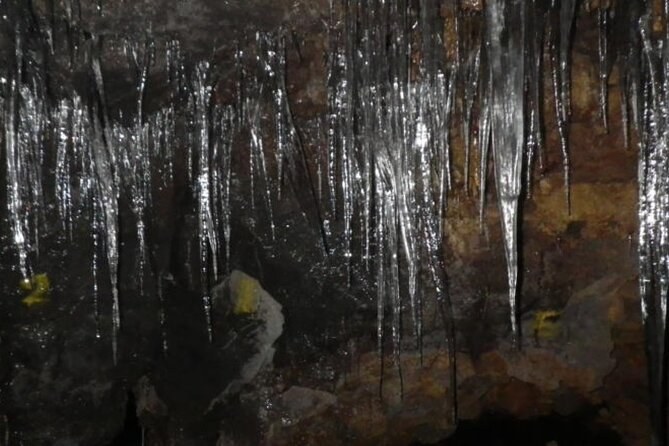
Then the layer people forget: Fugaku Wind Cave sits at around zero degrees in August and Narusawa Ice Cave stays below freezing all year. Travellers who wrote about the caves almost all mention wishing they had worn more.
The three things visitors get wrong
That you need a permit. You do not. The marked trails and the ticketed caves are open to anybody who turns up, and the only permits involved are the ones a guide holds for the unlit tubes.
That compasses fail here. They do not. Official Yamanashi tourism states that a compass held at normal height behaves exactly as expected, and the story comes from magnetite in the lava pulling an instrument laid flat on the rock.
That the bat cave is open in winter. It is shut for three and a half months every year, and a day built around it in January will not work.
Do you need a guide at all?
Honestly, no — not for the signed trail and the ticketed caves. A guide buys three things: entry to lava tubes that are neither lit nor railed, an explanation of why one tree lies flat while its neighbour stands upright, and a return leg that does not depend on the last bus.
If you have a car and want the signed loop, keep your money. Aokigahara Forest Without a Tour works through the independent version properly.
Where to eat, and what is actually open
There is nothing inside the forest. No cafe at the far end of the trail, no vending machine at the halfway point, and the kiosks at the cave entrances sell drinks and little else. This surprises people more often than it should.
Michi-no-eki Narusawa, the roadside station on the main road through the forest, has a restaurant, a shop and proper facilities, and it doubles as the meeting point for one of the guided walks. It is the only substantial food anywhere near the trailheads.
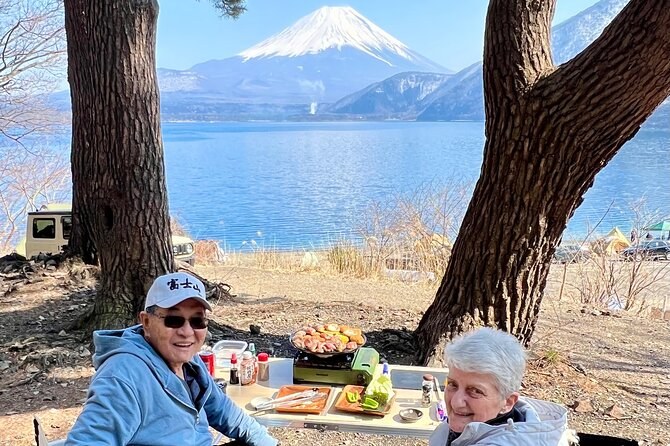
The better plan is to eat at Kawaguchiko. The hoto noodle restaurants there are the local speciality, a thick miso broth with flat wheat noodles and pumpkin, and they are a far better lunch than anything you will find beside a car park. Carry water and something in your bag for the walking itself.
A first visit, hour by hour
If you are coming for a single day and want a shape to work from, this is the one that consistently works. It assumes you are starting from Kawaguchiko Station and using the bus.
- Leave Kawaguchiko by nine. Earlier if you can. The trail is quietest before ten and the cloud that hides the mountain builds through the morning.
- Koyodai Lookout first. Twenty minutes up, twenty back, and the view of the canopy running to the foot of the mountain is the thing that explains everything you are about to walk through.
- Fugaku Wind Cave next. The gentlest of the three, level underfoot, with the cold store and its boxes of cocoons still in place. Fifteen minutes.
- Walk the marked path to Narusawa Ice Cave. About twenty minutes through the trees, and the best walking of the day.
- Narusawa Ice Cave. Steeper, colder, ice underfoot. Another fifteen minutes and the most dramatic of the three.
- The nature trail loop. An hour, flat, and the part where the forest stops being a series of attractions and becomes a place.
- Back by the bus you photographed on arrival. Lunch at Kawaguchiko.
That comes to roughly five hours including the travelling, costs two cave admissions and a return bus fare, and leaves the third cave for a second visit or for a longer day with a car.
Ready to pick a walk?
Guided departures start at $51 per person, with the equipment handed out at the trailhead and free cancellation up to 24 hours ahead.
Once the practical side is settled, Things to Do covers what to fit between the trailheads and the lava caves explains why three tubes from one eruption are so unalike.
The three departures most people start with
The cheapest guided morning, the walk that never leaves the forest, and the private day that reaches it from Tokyo.