Can you really see Aokigahara Forest in a day from Tokyo?
Yes, and a great many people do. The forest sits about a hundred kilometres west of the city and the road takes roughly two hours in each direction outside the weekend rush, which leaves six or seven usable hours at the far end.
What you cannot do is treat it as a half day. Every departure that starts in Tokyo runs nine to eleven hours door to door, and any itinerary promising the forest, the mountain, the lakes and Hakone inside that is promising you a windscreen tour of most of it.
How early do you have to leave?
Nine in the morning is the standard departure and it is about right. Leaving at nine puts you at the forest around eleven, gives you the middle of the day where the light under the canopy is best, and returns you to the city in the evening.
Leaving later than ten compresses the far end badly. The show caves close at five, the light goes early from November, and the last hour of a late start is usually spent driving past things rather than stopping at them.
How much of the day is actually spent moving?
Between four and five hours of a nine to eleven hour day, which is the number worth internalising before you book anything. It is not wasted time — the run out through the mountains is genuinely scenic — but it is time that is not spent at the destination.
| Departure | Total | On the road | In the forest | Other stops |
|---|---|---|---|---|
| Private day with cooked lunch | 9 to 10 hours | About 4 hours | 30 minutes on the trail | Lake Motosu, Shiraito Falls, Arakurayama |
| Chartered car to Fuji and Hakone | 10 to 11 hours | 4 to 5 hours | Drive-past only | Four to six chosen from a long list |
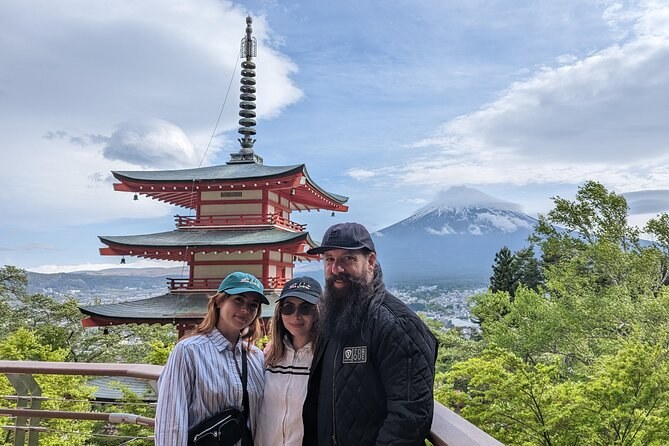
| Custom private tour, Fuji and Hakone | 10 to 11 hours | 4 to 5 hours | Optional drive-past | Chureito Pagoda, 5th Station, Hakone |
| Gotemba outlets and Mount Fuji | 11 hours | About 4 hours | 30 minutes on the trail | Outlets, ropeway, two show caves |
| Full day with a Spanish guide | 9 hours | About 3 hours | 30 minutes plus Fugaku Wind Cave | Eleven stops in total |
Read that table as a warning about the second and third rows rather than the first and fourth. Two of these days reach the forest and two of them pass it.
What fits into one day, and what does not?
Fits: the forest trail, one or two show caves — Fugaku Wind Cave is the usual first choice because it is level and short — a lake shore, a viewpoint, and lunch. That is a full and satisfying day, and every departure that does it well keeps to roughly that list.
Does not fit: Aokigahara Forest and Hakone. They are on opposite sides of the mountain and doing both means several more hours in the car and a forest reduced to a window. Two of the departures here will sell you that combination and both are honest about the forest being a drive-past.
Is a private car worth the difference?
Usually, on this particular route, and for a specific reason: the weather. The mountain is hidden for much of the year, and a private driver can reshape the day around cloud in a way a fixed coach itinerary cannot. Travellers who never saw the cone and still rated their day highly were almost all in private vehicles.
The second reason is the start point. One of the private days here will collect you in Tokyo at nine or at Kawaguchiko Station at half past ten, which saves four hours of road if you are already at the lake. Nothing else offers both.
What happens if Mount Fuji is clouded over?
Nothing to the forest, which is the useful part. The canopy, the lava floor and the caves are all unaffected by what the sky is doing, and the moss is at its best in wet weather.
What you lose is the view from Koyodai Lookout and the photographs from Arakurayama. Both are genuinely worth having and neither is worth building the whole day around, which is why the departures with several ground-level stops rate better on cloudy days than the ones selling a single viewpoint.
Where do you eat?
There is nothing inside the forest and very little at the trailheads. Michi-no-eki Narusawa has a restaurant and a shop; the cave kiosks sell drinks.
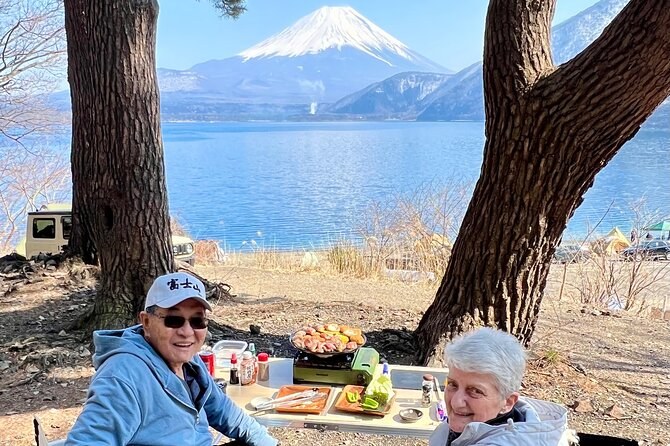
One of the private days cooks lunch for you on the route, outdoors from spring to autumn and as a warm local meal in winter, with vegan plates arranged at booking. On every other departure lunch is either bought at Kawaguchiko or carried, and the hoto noodle restaurants around the station are the local speciality and worth the stop.
Should you add Hakone, or is that one thing too many?
One thing too many, if the forest matters to you. Hakone is an excellent destination and it deserves its own day: hot springs, the lake, the ropeway and the open-air museum are not things to see through a window on the way back.
The two departures that combine them are honest about the trade. On both, Aokigahara Forest is listed as a pass-by rather than a stop, and the itinerary is assembled from a menu of four to six sites out of a much longer list.
What does a day trip actually cost?
Between $283 and $628 per person on the per-seat departures, and from $313 for a whole vehicle on the per-group ones. That range is wide because it is measuring two different products: a shared route with a fixed list of stops, and a car and driver for the day.
Add the cave admissions where they are not included, at 350 yen each, and lunch where it is not cooked for you. Neither changes the picture much against a fare of several hundred dollars.
Is it better to stay a night at Kawaguchiko?
If you can spare the night, yes, and it is not close. Staying at the lake turns four hours of road into twenty minutes, opens up the three-hour guided walks that assume you are already there, and lets you be on the trail at eight in the morning when it is empty and the light is best.
It also removes the single biggest constraint on a day trip, which is the return leg. Nothing about a Tokyo day is relaxed after four in the afternoon.
What order should the stops go in?
Viewpoint first, caves second, forest trail last. The cloud that hides the mountain builds through the morning, so a lookout at eleven is a very different proposition from a lookout at three. The caves are indifferent to time of day. And the forest trail is the thing you want to finish on, unhurried, rather than squeeze in.
A good private driver will already be doing this and adjusting for traffic. It is worth saying out loud at the start of the day rather than assuming.
What does the drive itself look like?
Better than most people expect, and worth staying awake for. The road out of Tokyo climbs steadily through the western suburbs and then into the hills, and somewhere past Otsuki the landscape stops being city and becomes mountain properly.
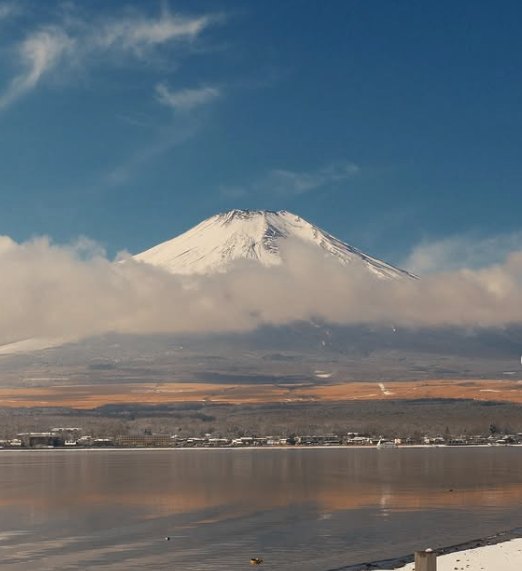
On a clear day the mountain appears on the approach long before you reach the lakes, which is usually the first photograph of the trip and often the best one. Coming back in the evening the road runs the other way into the light, which is why several of these itineraries put their last stop at a viewpoint.
Traffic is the variable. Weekend and holiday mornings out of Tokyo can add an hour in each direction, and every driver here will tell you the same thing: leave early or accept the difference.
What should you bring on a day this long?
Closed shoes with grip for the lava, a warm layer for the caves, water, and a few hundred yen in coins if your departure leaves admissions at the door. Cash matters more than usual at the cave kiosks, which are small.
On a nine to eleven hour day, add whatever makes four hours in a vehicle comfortable. One of the departures carries pocket Wi-Fi; the others do not, and signal is patchy for stretches of the route.
Leave the tripod behind. It is awkward in the caves, unnecessary on the trail, and four hours of road is long enough without carrying one.
Which day trip would we book?
The private day with the cooked lunch. It is the cheapest of the private departures, it actually stops on the forest trail rather than passing it, the barbecue is the thing travellers write about most, and the choice of starting in Tokyo or joining at Kawaguchiko makes it work for two quite different trips.
If the group is four or five and you want to write your own route, the customisable day priced per vehicle becomes the better arithmetic. Just be clear with the driver that the forest is a stop rather than a drive-past.
Frequently asked questions
How long does it take to reach Aokigahara Forest from Tokyo?
Can I do this as a half day from Tokyo?
Do the day trips include the cave admissions?
Is hotel pick-up included?
What is the latest I can book?
Days that start in Tokyo
Three ways to spend a single day out of the city, from a private car with lunch cooked on the route to a fully customisable itinerary you write yourself.

Tokyo to Mt Fuji & Hakone Private Tour With Custom Itinerary
From $313 per group (up to 5)
Check Availability