What does an Aokigahara Forest tour actually cost?
Anywhere from fifty-one dollars to over six hundred, and the spread is not a measure of quality. It is a measure of two completely different products being sold under one heading: a guided walk from the lake, and a private car and driver for a whole day out of Tokyo.
Comparing them directly is the mistake almost every visitor makes. Compare hours in the forest, what is included and whether the price is per person or per vehicle, and the numbers start making sense.
Why is one departure $51 and another $628?
Because one is three hours of walking with a guide who meets you at a station, and the other is eleven hours with a private vehicle, a driver, a licensed guide and hotel pick-up in Tokyo. The second is not six times better; it is a different thing.
The short walks buy depth in one place. The long private days buy range across many, plus the driving that a day trip from the city necessarily involves. Decide which of those you actually want before you look at a single price.
Which prices are per person and which are per group?
This is the distinction worth getting right before comparing anything, because three of the departures here are priced for the whole vehicle and their headline figures look alarming next to a per-seat fare.
| Departure | Headline price | Basis | Cost for four people |
|---|---|---|---|
| Ice cave spelunking walk | $51 | Per person | About $206 |
| Sea of Trees and ice cave walk | $55 | Per person | About $222 |
| Full day with a Spanish guide | $93 | Per person | About $374 |
| Custom private tour from Tokyo | $313 | Per group up to 5 | $313 |
| Private day with cooked lunch | $283 | Per person | About $1,134 |
| Hidden Fuji private drive | $386 | Per group up to 4 | $386 |
| Kayak, village and forest | $386 | Per group up to 8 | $386 |
| Gotemba outlets and Mount Fuji | $628 | Per person | About $2,513 |
| Chartered car to Fuji and Hakone | $628 | Per person | About $2,513 |
Read that final column twice. Two departures showing the identical $386 are priced for the whole car, and for a family of four they are among the cheapest things here rather than the most expensive.
At what group size does a private tour become cheaper?
Around three people, and decisively at four. The Hidden Fuji private drive is $386 for up to four, which is $97 a head at capacity against $51 for a shared walking tour — but it is six hours with a car rather than three on foot, and it includes an hour on the forest floor.
The kayak and village day is $386 for up to eight, which works out at $48 a head at capacity: less than the cheapest per-person walk on the list, for five hours with ninety minutes in the forest and admission included. If your group is large, run this arithmetic before assuming private is out of reach.
What is included, and what are you still paying for?
The short walks from the lake include the most: guiding, equipment, transfers and in two cases the cave admission. The long private days include the vehicle, the driver and the pick-up, and leave admissions and food to you.
One departure includes lunch cooked on the day. One includes a kayak session. None includes gratuities, and none needs to.
Do you still pay the cave admission?
On most of the longer departures, yes. Each of the three lava caves charges 350 yen for an adult and 200 yen for a child at its own door, and a combined ticket for two of them is sold at whichever you reach first.
Is lunch ever included?
On one departure, and it is the thing travellers write about most: Japanese barbecue cooked outdoors from spring to autumn, or a warm local meal in winter, with vegan plates arranged at booking.
Everywhere else, lunch is yours. There is nothing inside the forest and very little at the trailheads, so plan on eating at Kawaguchiko before or after, where the hoto noodle restaurants are the local speciality.
Are tips expected in Japan?
No. Tipping is not customary and is often politely declined. Two of the listings here name gratuities among their exclusions, which is standard wording on an international booking platform rather than a local expectation.
If a guide has genuinely made the day, a written review is worth considerably more to them than cash they would rather not take.
What is the cheapest honest way to see the forest?
Walk in. The trails are free, the bus from Kawaguchiko is a few hundred yen each way, and three cave admissions come to about a thousand yen per person. That is a complete half day for the cost of a coffee and a bus fare.
The cheapest guided option is the three-hour spelunking walk at $51 per person, which buys the equipment, an unlit tube, the transfers and the explanation. Below that there is nothing, and nothing needs to be.
What is worth paying more for?
Hours in the forest, and a return leg. Those are the two things that reliably improve a day here and the two that money genuinely buys.
What is not worth paying more for is a longer list of stops. The eleven-stop days give the forest half an hour, and half an hour is a photograph rather than a visit. If the Sea of Trees is why you came, the cheapest departure on the list gives you more of it than the most expensive.
What does free cancellation actually cover?
A full refund if you cancel at least 24 hours before the start time, on every departure listed. Several also refund if the operator calls the day off for weather.
Inside 24 hours there is no refund and no change, on any of them. The practical consequence is that booking early costs nothing and holds the date you actually want, so there is no reason to wait on a forecast you cannot see yet.
What does a self-guided day cost by comparison?
Very little, and it is worth having the figure in your head before you judge any fare. A return bus fare from Kawaguchiko to the cave stops plus three admissions comes to roughly two thousand yen a head.
That buys the forest trail, three lava caves and a half day of walking between them. It does not buy the equipment, an unlit tube, anybody explaining the ground, or a lift back once the last service has gone.
The honest comparison is therefore not fifty-one dollars against two thousand yen. It is what the extra buys, and for a first visit the answer is usually worth it, while for a second visit with a car it usually is not.
Where does the money actually go?
On the short walks, into people and permits. A guide for three hours, the caving equipment, the permit for a tube that is not open to the public, and a vehicle to move a small group between the station and the trailhead.
On the long private days, into the vehicle and the driver for eleven hours plus the fuel and expressway tolls for a two hundred kilometre round trip. That is why a private day from Tokyo cannot be cheap and why the per-group ones only make sense once the car is reasonably full.
Almost none of it goes on admissions, which is the smallest number in this whole page at 350 yen a cave.
Are there hidden costs to plan for?
Few, and none of them large. Cave admission at 350 yen each where a fare does not cover it; lunch on every departure but one; and the bus or train fare to Kawaguchiko if your walk starts there rather than in Tokyo.
Nothing here charges for equipment, nothing charges a fuel supplement, and gratuities are not a local custom whatever a listing's exclusions column says. The one genuine variable is the yen you spend at the cave kiosks, which is entirely under your control.
Budget a few thousand yen a head on top of any fare and everything on the route is covered. On the short walks that include admission, budget nothing.
Which departure gives the most forest for the money?
The Sea of Trees walk at $55, without much argument. Three hours entirely inside Aokigahara Forest with the cave admission and the shuttle already paid works out at about eighteen dollars an hour under the canopy.
The spelunking walk at $51 is close behind and adds the unlit tube. Everything priced above a hundred dollars is buying you range, a vehicle or a driver rather than more of this forest.
Frequently asked questions
Are the prices per person or per group?
Do prices change with the season?
Is there a cheaper time to go?
Do children pay full price?
What is not included in any fare?
One departure from each price band
One from each band in the table: the floor at fifty dollars, and the two per-group cars whose arithmetic changes with every person you add.
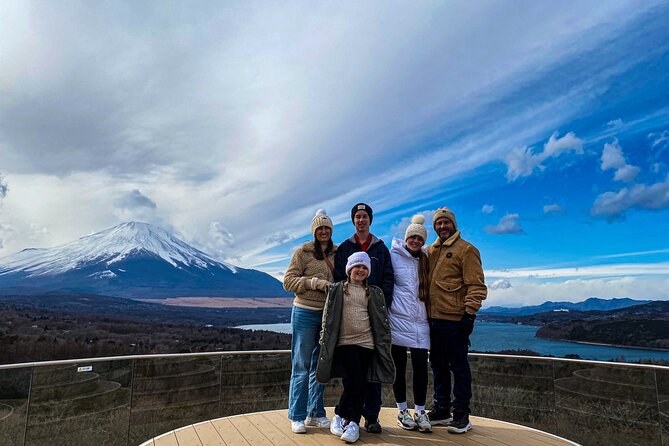
Hidden Fuji drive tour with a Local English speaking guide
From $386 per group (up to 4)
Check Availability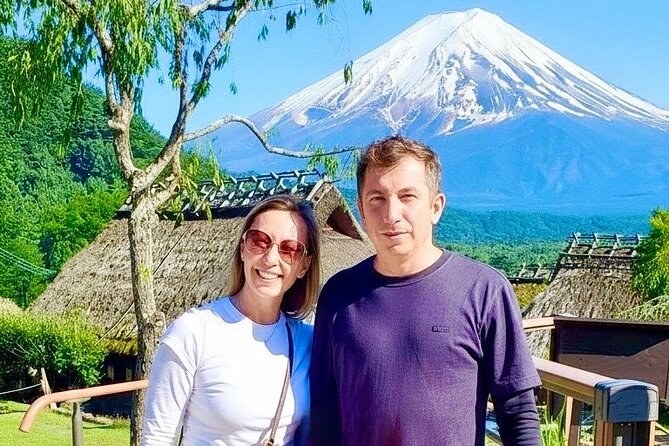
Private Guided Tour of the Mount Fuji Region (English/French)
From $386 per group (up to 8)
Check Availability