When is the best time to visit Aokigahara Forest?
Late October to early December for colour and the clearest air, and late February to April if the cave ice is what you are coming for. Those two windows are the strongest, and they are strong for entirely different reasons.
The forest itself is evergreen and open every day of the year, so there is no bad month here in the way there is at a seasonal attraction. What changes is the light, the crowd, what is open underground and the odds on seeing the mountain.
What is the forest like in spring?
The best months for the floor. Moss is at its most vivid after the spring rains, new growth lightens the canopy, and the birds are as vocal as they get all year. The walking is comfortable and the trails are not yet busy.
Saiko Bat Cave reopens on 19 March, which makes late March onwards the first point in the year when all three caves are available. Narusawa Ice Cave still holds substantial ice from the winter.
Does summer help or hurt?
Both. The canopy is at its densest and darkest, the ferns are at full height, and the caves become a genuine relief from the humidity at around zero degrees. That contrast is a real pleasure and it is the one thing summer does better than any other season.
Against it: heat, humidity, insects, and the busiest trails of the year through the school holidays. The mountain is also least likely to be visible in summer, which surprises people who booked for the weather.
Why is autumn the photographer's season?
Because everything aligns. The broadleaf species turn against the evergreen, the air is at its clearest so Koyodai Lookout finally shows the cone properly, the fungi are fruiting along the trail edges, and the light under the canopy is low and warm.
It is also the busiest window for the whole Fuji Five Lakes region, so an early start matters more in November than in any other month. On the trail by eight and you will have it largely to yourself.
Can you visit in winter?
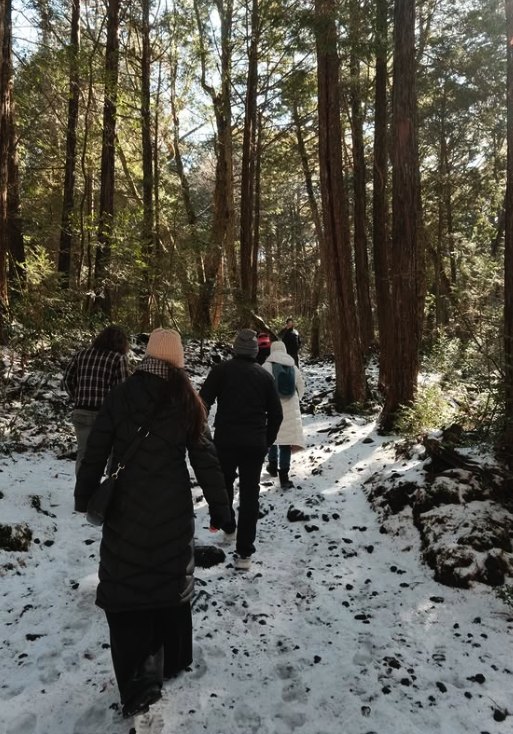
Yes, and it is underrated. Snow is possible from December to March, the trails stay walkable, the root structures are the most visible they ever are, and the ice in Narusawa Ice Cave is at its most impressive.
The constraints are daylight and the bus timetable, both of which shorten together. Start before ten, keep the plan tighter than you would in June, and layer properly — the caves are cold in August and colder in January.
When is Saiko Bat Cave closed, and why?
From 1 December to 19 March, every year, while the bat colony inside it hibernates. Waking a hibernating bat burns fat reserves it cannot replace until spring, so the closure is enforced rather than advisory.
When is the cave ice at its biggest?
Late winter into spring, roughly February to April, after a full season of cold has built the pillars up. Narusawa Ice Cave is below freezing in every month, so there is ice in August, but it is at its most substantial at the end of winter.
That makes March a quietly excellent month here: the bat cave has reopened, the ice is at its peak, and the autumn crowds are eight months away.
When is Mount Fuji most likely to be visible?
The colder half of the year, and it is not close. Clear air in late autumn and winter gives the highest odds of seeing the cone from Koyodai Lookout; summer humidity gives the lowest.
Mornings beat afternoons in every season. Cloud builds around the mountain through the day, so a viewpoint at nine is a different proposition from the same viewpoint at three.
Which months are busiest?
The autumn colour weeks and the summer school holidays, in that order. Both affect the trailheads and the cave car parks more than the trails themselves, because most visitors do not walk far from where they parked.
| Season | Canopy | Caves | Crowds | Mountain visible? |
|---|---|---|---|---|
| Mar – May | New growth, vivid moss | All three open from 19 March | Moderate | Often |
| Jun – Aug | Dense and dark, humid | All three, a relief from the heat | Busiest in August | Least likely |
| Sep – Nov | Broadleaf colour, clear air | All three open | Busiest in November | Best odds |
| Dec – Feb | Evergreen, possible snow | Bat cave shut, ice at its best | Quietest | Clear but short days |
What should you wear in each season?
The same shoes all year: closed, with a real tread, because wet lava is the constant. The layers are what change.
Spring and autumn need a fleece for the caves and little else. Summer needs the same fleece despite everything your body is telling you, plus insect repellent. Winter needs proper layers, gloves and an early start, because the light goes before you expect it to.
Does bad weather cancel a tour?
Rarely, and rain in particular changes very little here. The canopy takes the worst of it, the caves are indifferent, and the moss is at its best wet. What suffers is the viewpoint, because cloud closes the view.
Several departures are weather-dependent and refund in full if the guide calls the day off. Your own 24-hour cancellation window covers everything else, so booking ahead of a forecast you cannot see costs you nothing.
How does the season change what a walk costs?
Fares themselves move with demand rather than with the calendar, and the operators reprice around the autumn colour weeks and the New Year period more than at any other time. January and February are consistently the easiest months to book anything at short notice.
What changes more reliably is what you get for the fare. A winter departure reaches two caves rather than three and runs in shorter daylight; an autumn one reaches all three and competes for space on the trail. Neither is priced for that.
Cave admission is 350 yen in every month of the year, which is the one number here that never moves.
What is different about visiting at either end of the day?
More than the season, on some measures. The trail is quietest before ten and after three, the cloud that hides the mountain builds through the middle of the day, and the light under a closed canopy is best when the sun is low.
The constraint is that the caves keep office hours. All three open at nine and close at five, with shorter winter hours, so an early start is available and a late finish is not. That asymmetry is why almost every good plan here starts early.
An eight o'clock arrival at the trailhead in November is the single best hour this forest offers, and almost nobody takes it.
How does the forest itself change through the year?
Less than the surroundings do, which is part of its appeal. The dominant hemlock and cypress are evergreen, so the canopy never opens up the way a broadleaf wood does, and the trail underfoot is the same lava in February as in July.
What moves is the detail. Moss colour peaks after the spring rains and again in the autumn wet; the fungi fruit visibly along the trail edges from September; and in winter, with the undergrowth down, the root structures riding over the rock are the clearest they ever get.
That last one is worth planning for if the geology is what draws you. A January walk shows you the bones of this place in a way a June walk cannot.
Are there events or festivals worth timing a visit around?
Not inside the forest itself, which keeps no calendar at all. The events worth knowing about are in the wider Fuji Five Lakes area and they move the crowds rather than the forest.
Spring brings the shibazakura flower displays to the southern side of the mountain and autumn brings the maple corridors around Lake Kawaguchi, and both fill the roads and the car parks for a few weeks. If you are visiting during either, start at the trailhead early and let everyone else arrive at eleven.
Dates for these shift year to year with the weather, so confirm them against the organiser rather than assuming last season repeats.
Which month would we pick?
March, narrowly, and for reasons that have nothing to do with the weather. All three caves are open again from the nineteenth, the ice is at its annual peak, the trails are empty, and the air is still clear enough for the mountain.
November is the other answer, and the more photogenic one. Take March if the caves are the point and November if the forest and the view are, and accept that November will be shared with a great many other people.
Frequently asked questions
Is Aokigahara Forest open all year?
Is there snow in winter?
When is the ice cave at its best?
Do tours run through the winter?
What is the quietest month?
Departures that hold up all year
Departures that hold up across the whole calendar — the three-hour forest walk that runs year-round, and the long Tokyo day that adapts to whatever is open.
Mt Fuji Hidden Gem & Gotemba Premium Outlets with Local Driver
From $628 per person
Check Availability